


.avif)


Cold outbound is collapsing.
Not declining. Collapsing.
Every day, your target buyers are bombarded with a flood of cold emails and messages that all sound the same. AI is cranking out millions of generic emails every day. And even “personalization” is falling short.
Buyers are numb. Their BS detector is at an all time high. And reply rates on cold emails are usually a tiny 1-2%.
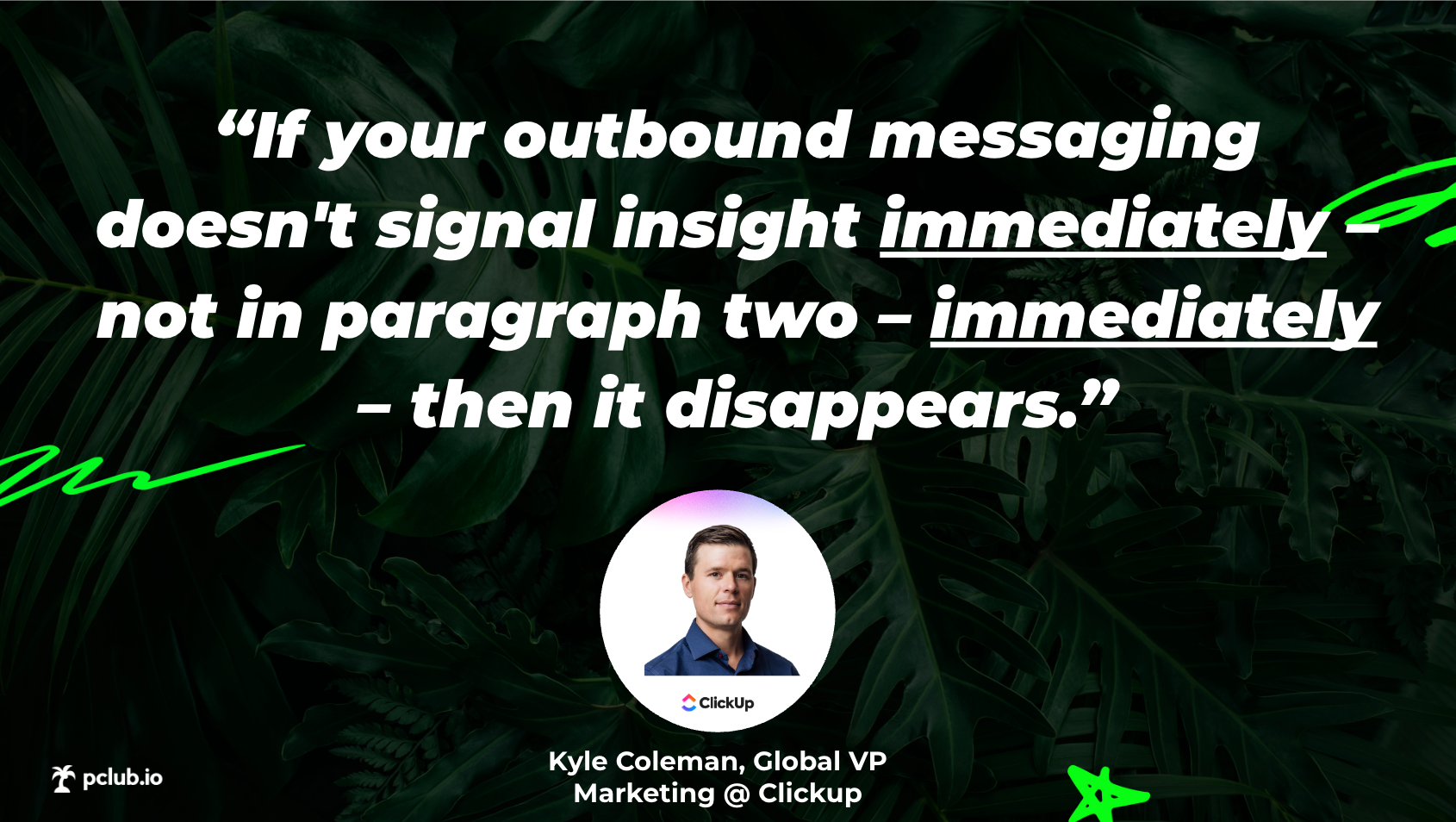
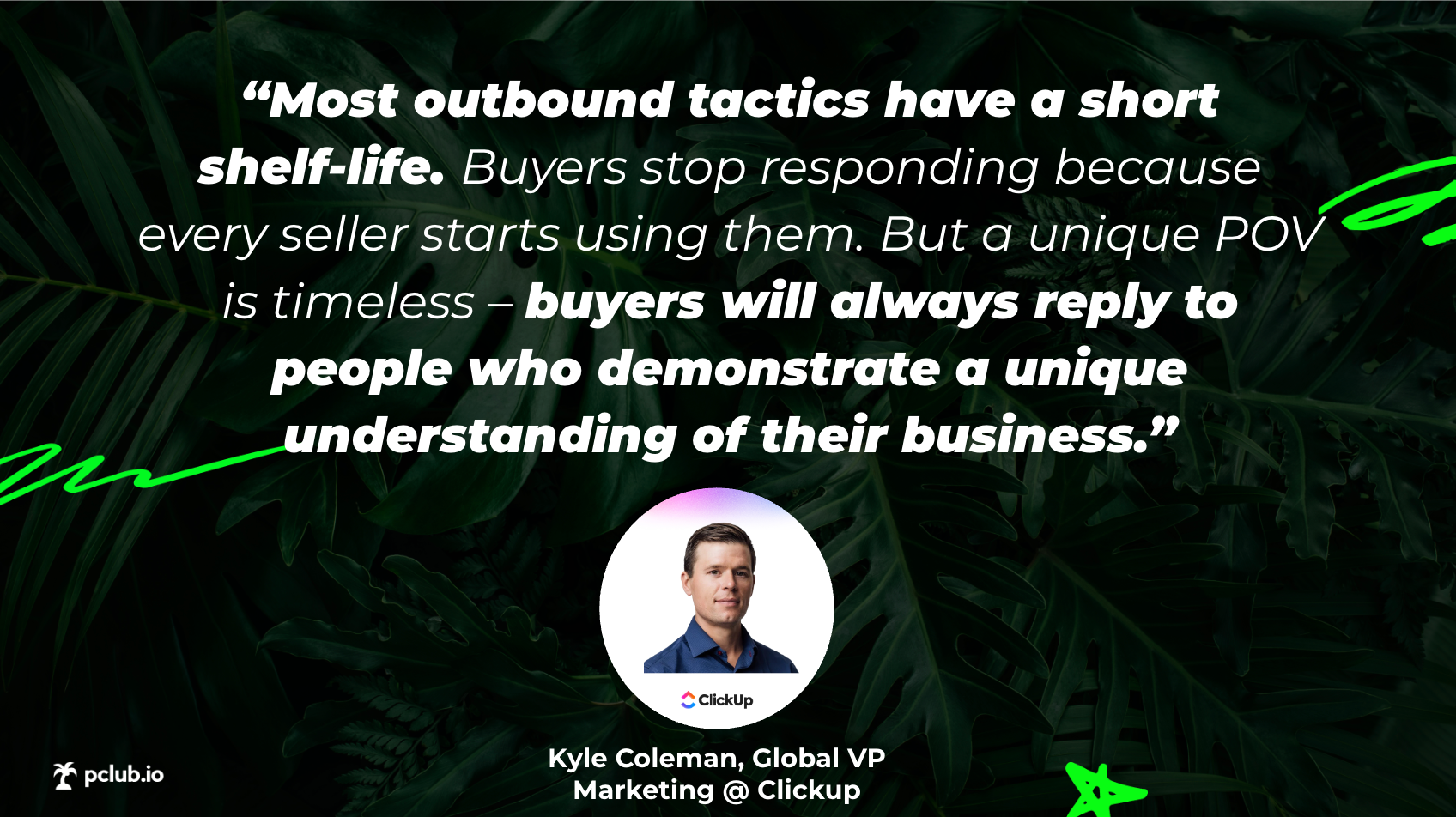
As Kyle Coleman, Global VP Marketing at Clickup has said:
Indeed.
If you’re sending generic emails, making templated cold calls – you’re not just ineffective.
You’re invisible.
Yet this is how most AE and SDR teams prospect today.
But there’s a new way. And if you nail it? You can expect your reply rates to triple. And even reach up to 20% in some cases, if you play your cards right.
Introducing the New Way: POV-Led Outbound
I’m excited to announce that we just launched our newest flagship training program designed to help modern outbound SDRs and AEs triple their pipeline generation in today’s modern era of AI, market noise, and buyer skepticism.
It’s called Advanced Cold Outbound – POV Edition (learn more about it here)
What exactly is “POV-led outbound”?
It’s where your outreach attempts and messages lead with an insight that reframes your buyer’s problems and gets them to think, “these people understand my world better than I do.”
It’s the pinnacle of outbound effectiveness. And until now, this knowledge has never been codified. It’s been locked in the heads of some of the world’s most effective revenue experts, never shared with the rest of us to learn from.
Until now.
In this post, I’m going to share 5 powerful lessons I personally learned from certifying on this new skill acceleration program.
First, let me introduce you to the Revenue Instructor behind the course.
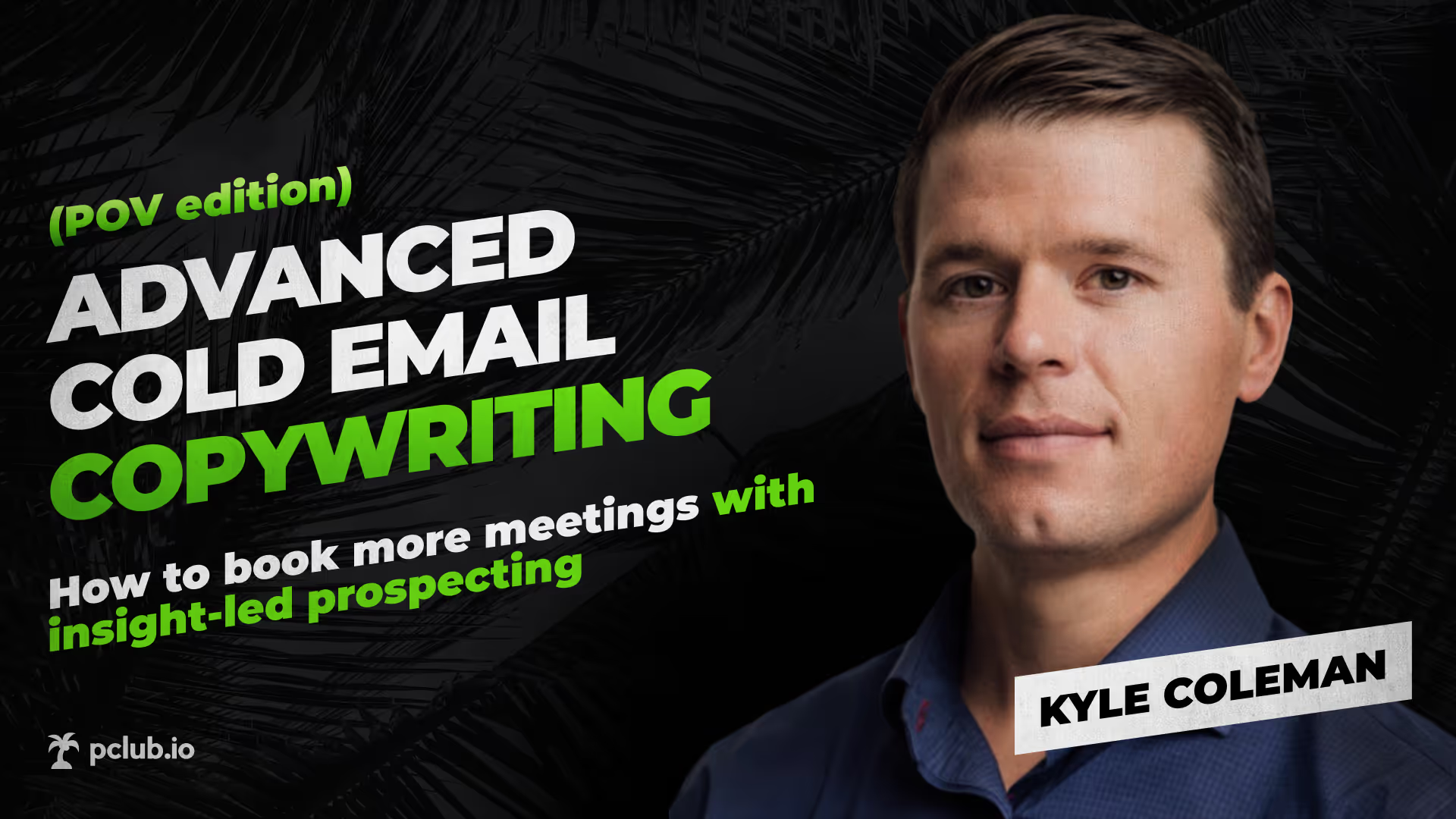
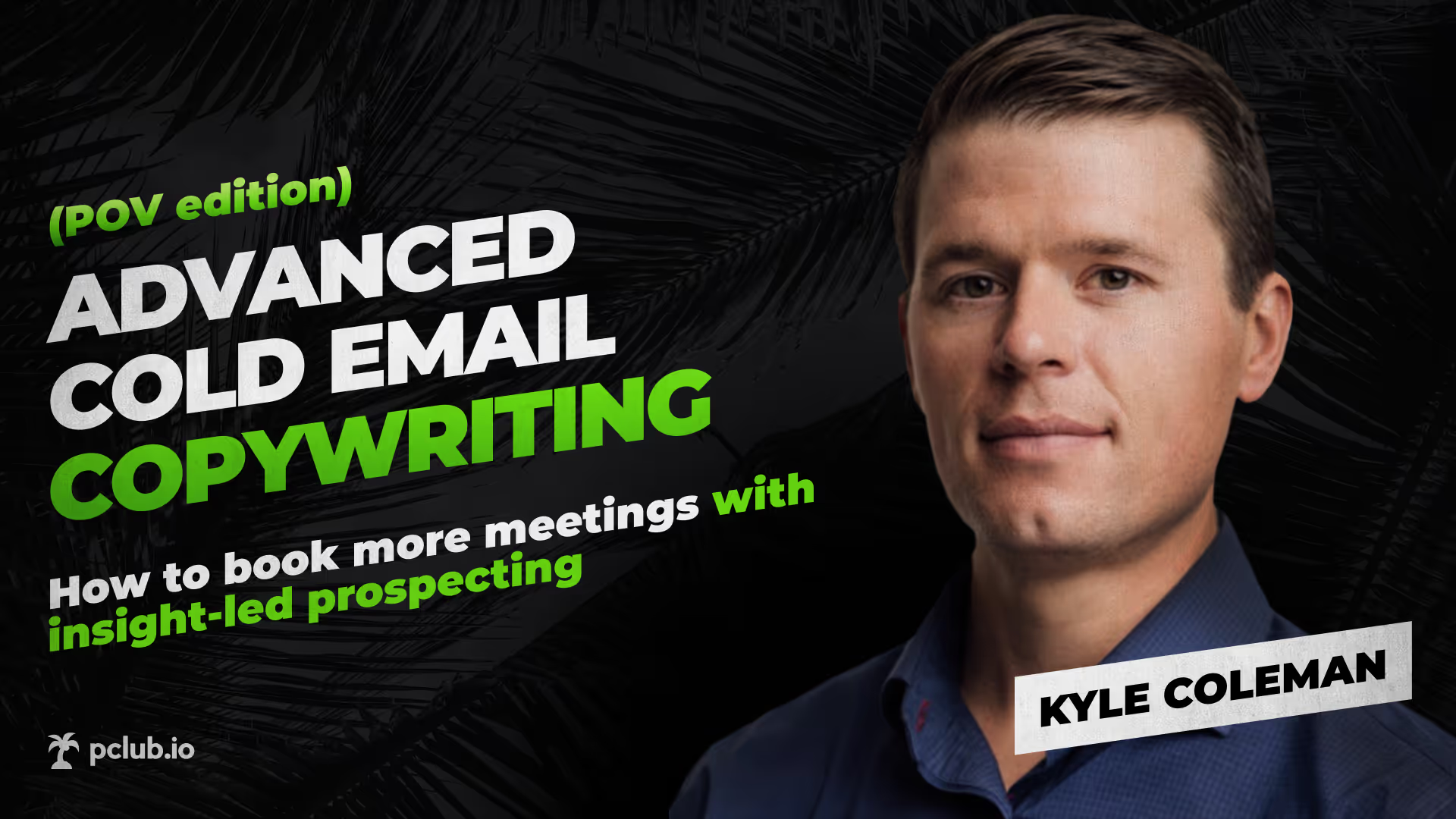
Meet Kyle Coleman, Global VP of Marketing at Clickup.
Kyle has one of the most impressive careers in B2B technology that I’m aware of.
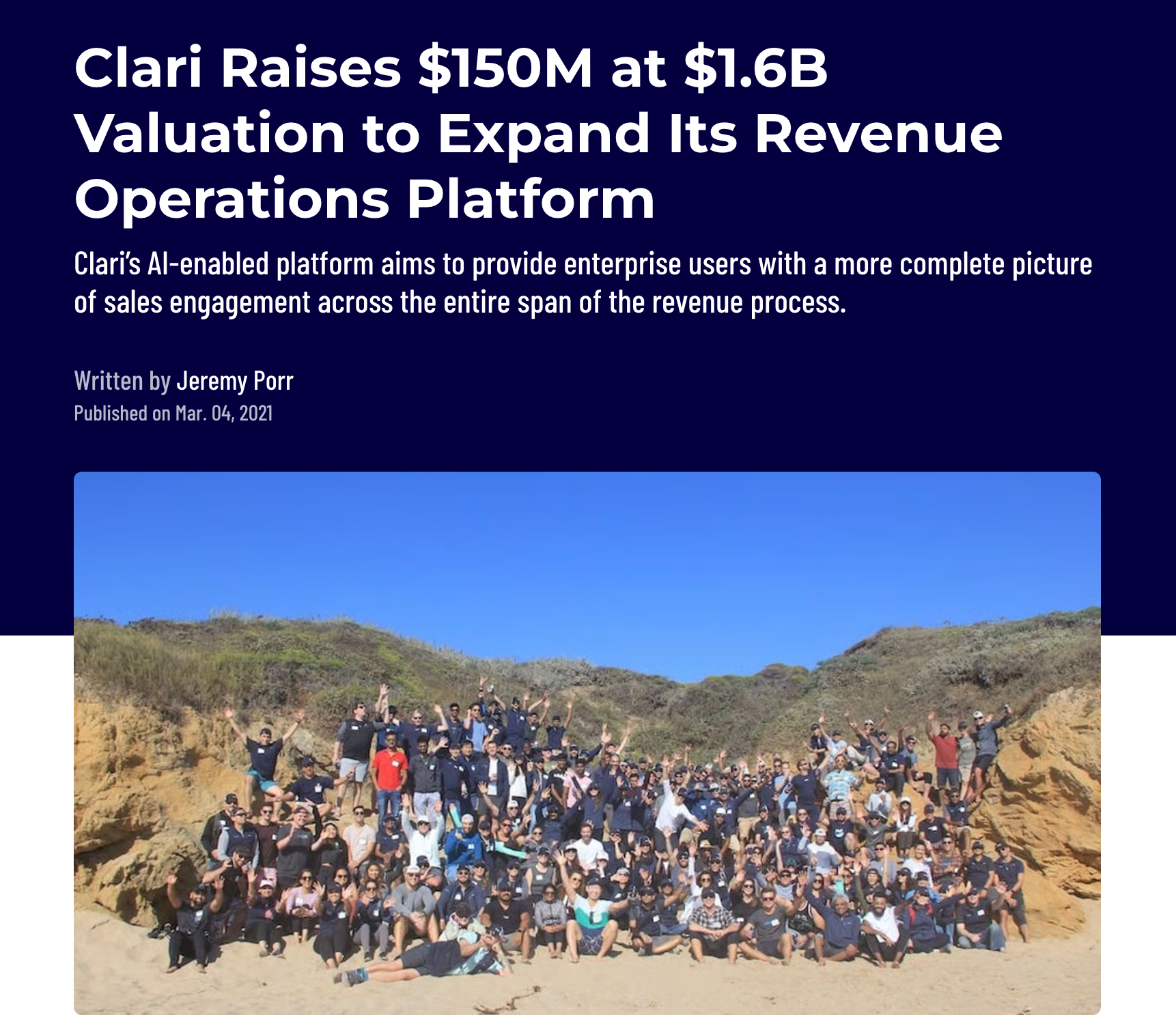
Only a decade ago, he started as the founding SDR at Looker Software, eventually building the team to 65 SDRs. He then moved onto Clari (where he became CMO and achieved a unicorn valuation), Copy.ai, and now Global VP at Clickup (one of the hottest tech companies that exists today).
In every company he’s worked at, he’s built a formidable outbound program that – in some cases – has tripled pipeline generation. In fact that’s exactly what he did at Clari. When he took over their outbound program, reply rates were just 2% on their outbound sequences. After he revamped it with POV-led outbound strategies, they tripled their outbound-sourced pipeline generation, reaching a $1.6 billion valuation after raising their Series E funding round.
Arming SDRs and AEs (anyone who does outbound prospecting) with the training they need to develop a clear point-of-view that cuts through the noise like a hot knife sinking into butter.
So as you can imagine, there is no better person on this spinning rock we call earth to learn POV-led outbound from. Here’s five lessons I took away, and a little more about the program itself.
Lesson #1: If you don’t signal insight immediately, you’re invisible.
Busy buyers get hundreds of emails every day.
That means their pattern recognition (and BS detector) is very well-tuned.
They don’t have to read the full email to decide they want to delete it.
As Kyle explains in the course:
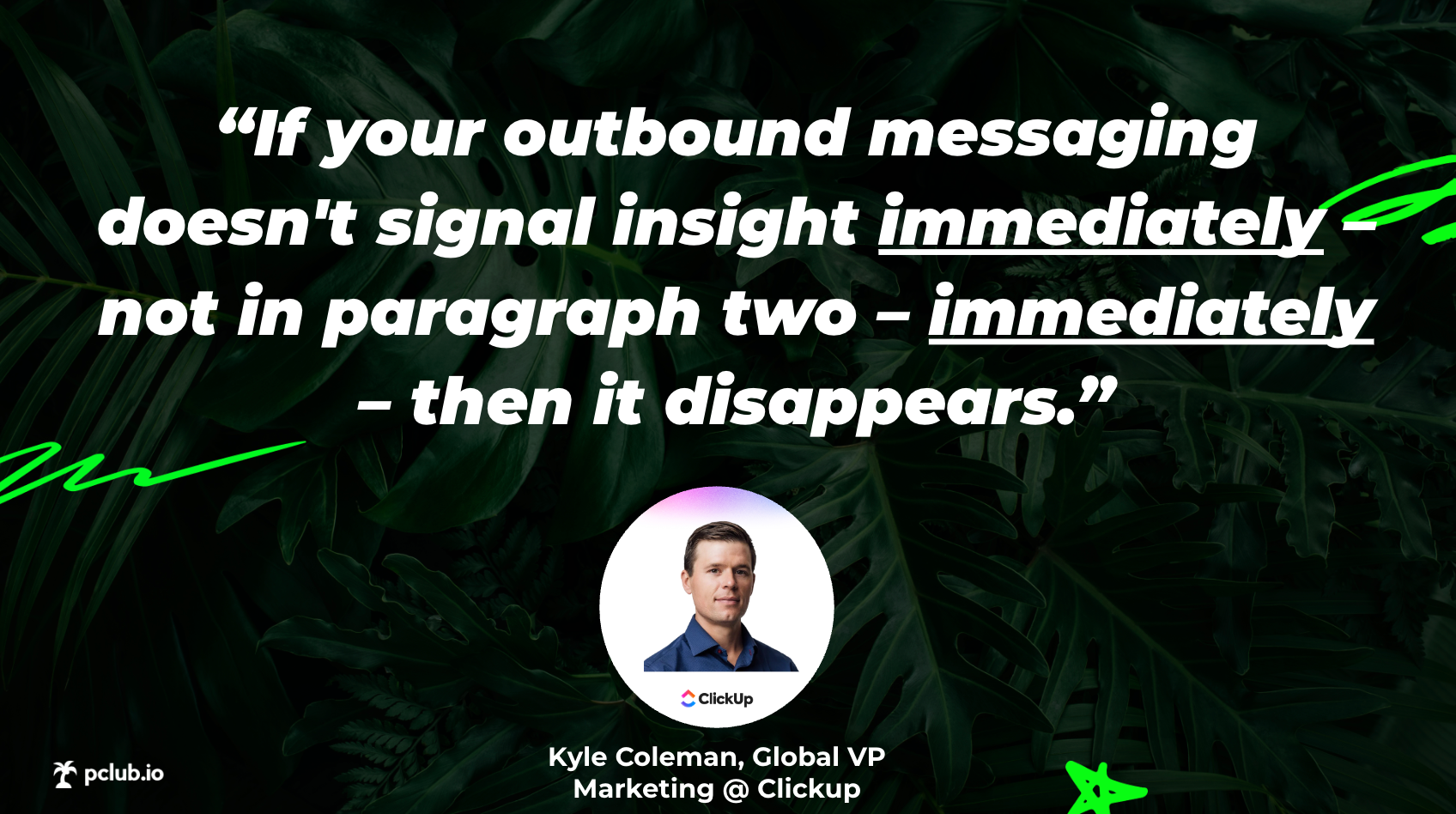
If you don’t lead with insight, paragraph two won’t even see the light of day.
Let alone the rest of the email.
How many of your outbound attempts do that?
If you’re anything like the average seller today, not many.
Lesson #2: Buyers reply when your message reflects their reality.
They don’t reply when they understand your product.
Or its benefits.
Or its value prop.
Or the outcome it delivers.
They reply when you demonstrate you understand what’s going on in their world.
Throughout the course, Kyle shares more than 15 email teardowns.
He starts with a “good but not great email.”
Then he gives it a makeover so it generates 3X more positive replies.
In every example he shares, the POV does all the heavy lifting in the email.
The great emails are short, and they don’t even mention the product at all (or its benefits).
Here’s a simple example:
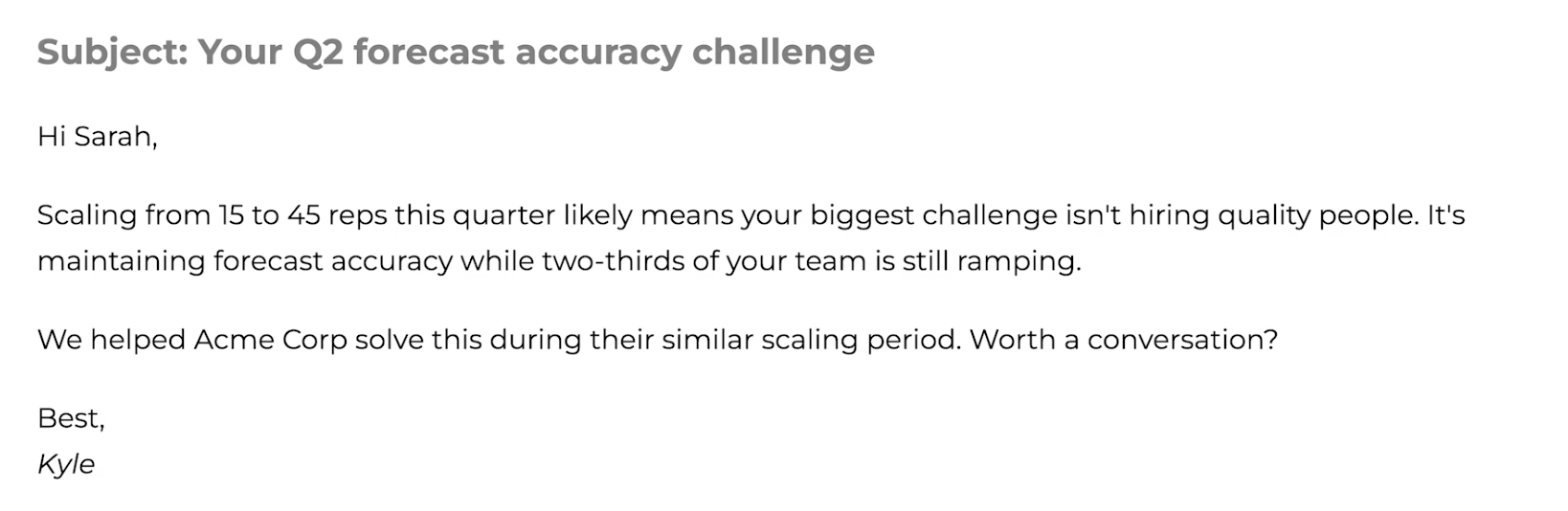
What does this simple email communicate?
I understand your world.
Lesson #3: Triggers are Easy. POVs are Hard.
Most sellers today worship triggers, signals, and personalization.
But these are the easy parts.
Every seller today has access to triggers and signals.
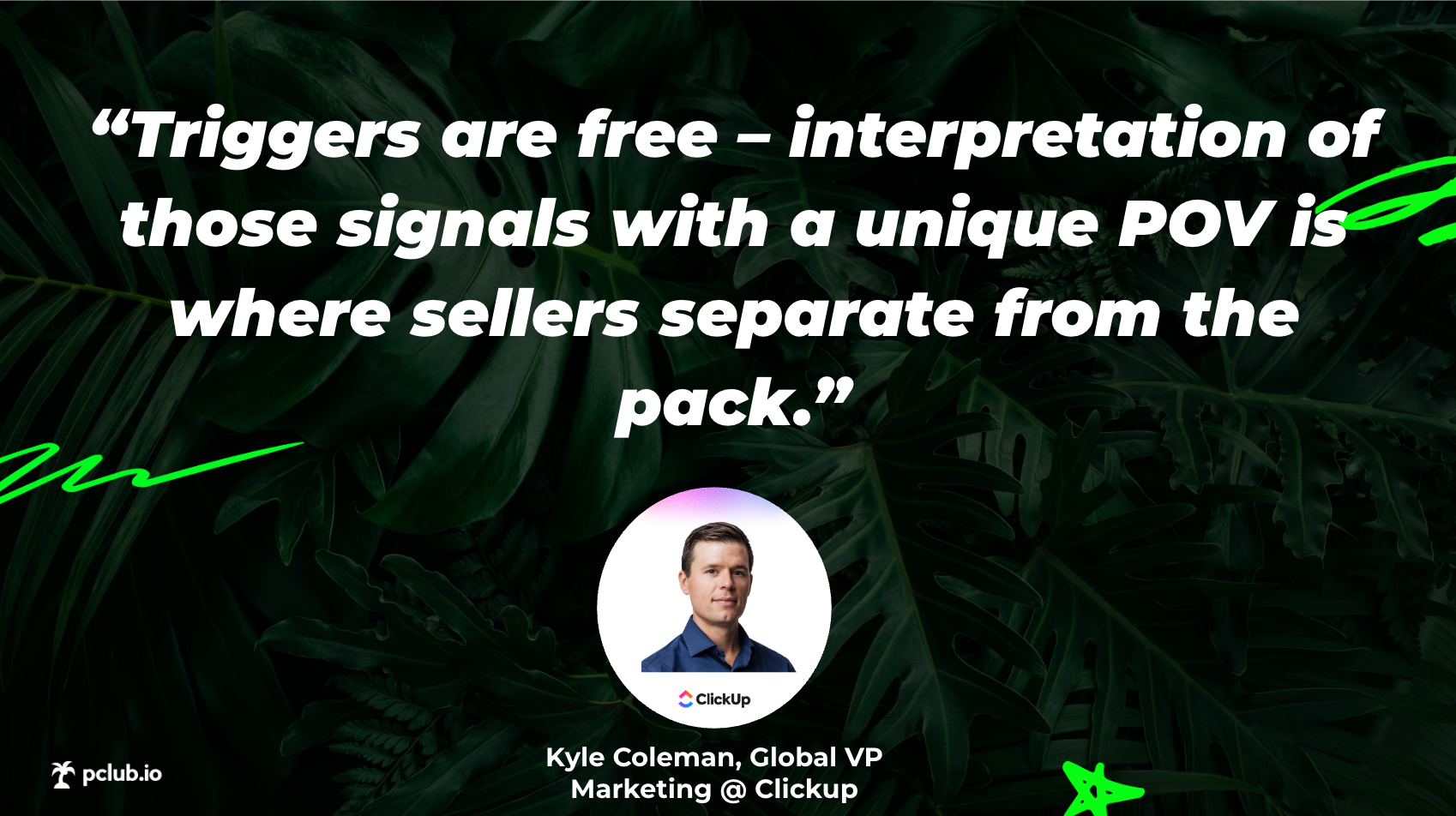
Here’s what Kyle says about that:
Personalization is practically worshipped by outbound sellers today.
But personalization is not what gets replies.
Anyone can write an email that proves they read Techcrunch, visited the buyer’s website, or “stalked” them on LinkedIn.
But that approach mistakes observation for understanding.
Here’s what separates superstar outbound sellers:
Weak sellers use personalization. It proves they did research.
Star sellers build a point of view. That proves they know how to think.
And in today’s environment?
Buyers only want to talk to sellers that have a unique perspective on their slice of the world.
Triggers and signals are free and abundant.
Interpretation of those signals (with a unique POV) is where sellers separate from the pack.
Lesson #4: Not all signals are created equal
Sellers who master signal-based prospecting get 2x–5x higher reply rates (15–25%) compared to 3–5% from those that don't.
Everyone KNOWS they should do signal-based prospecting.
But almost every seller gets it wrong.
Here's why:
They treat every signal as equally valuable.
That leads to weak messages that get weak reply rates.
What makes a strong signal that gets massive reply rates?
It passes this acid test:
Strong signals create operational or strategic pressure on your buyer.
Weak signals are just interesting context.
Strong signals:
• Expansion, launches, funding, M&A
• New exec hires aligned to your solution
• Changes that create operational pressure
Weak signals:
• Random hires and open job recs
• Awards the company recently won
• Anything that doesn't create new pressure
Strong signals create operational and strategic pressure. Weak signals are just activity.
Lesson #5: Weak Sequences, Strong Sequences
According to Backlinko's research, you're twice as likely to get replies from the 2nd and 3rd attempt in an outbound sequence. But only if you nail the sequence in a specific way.
The brutal truth?
Most sequences are just repetition of the first touch.
They repeat the same idea 5x.
Strong sequences don't just remind. They build.
• 1st touch sets up the 2nd touch.
• 2nd touch sets up the 3rd touch.
• 3rd touch sets up the 4th touch.
All in a way that creates momentum. Not repetition.
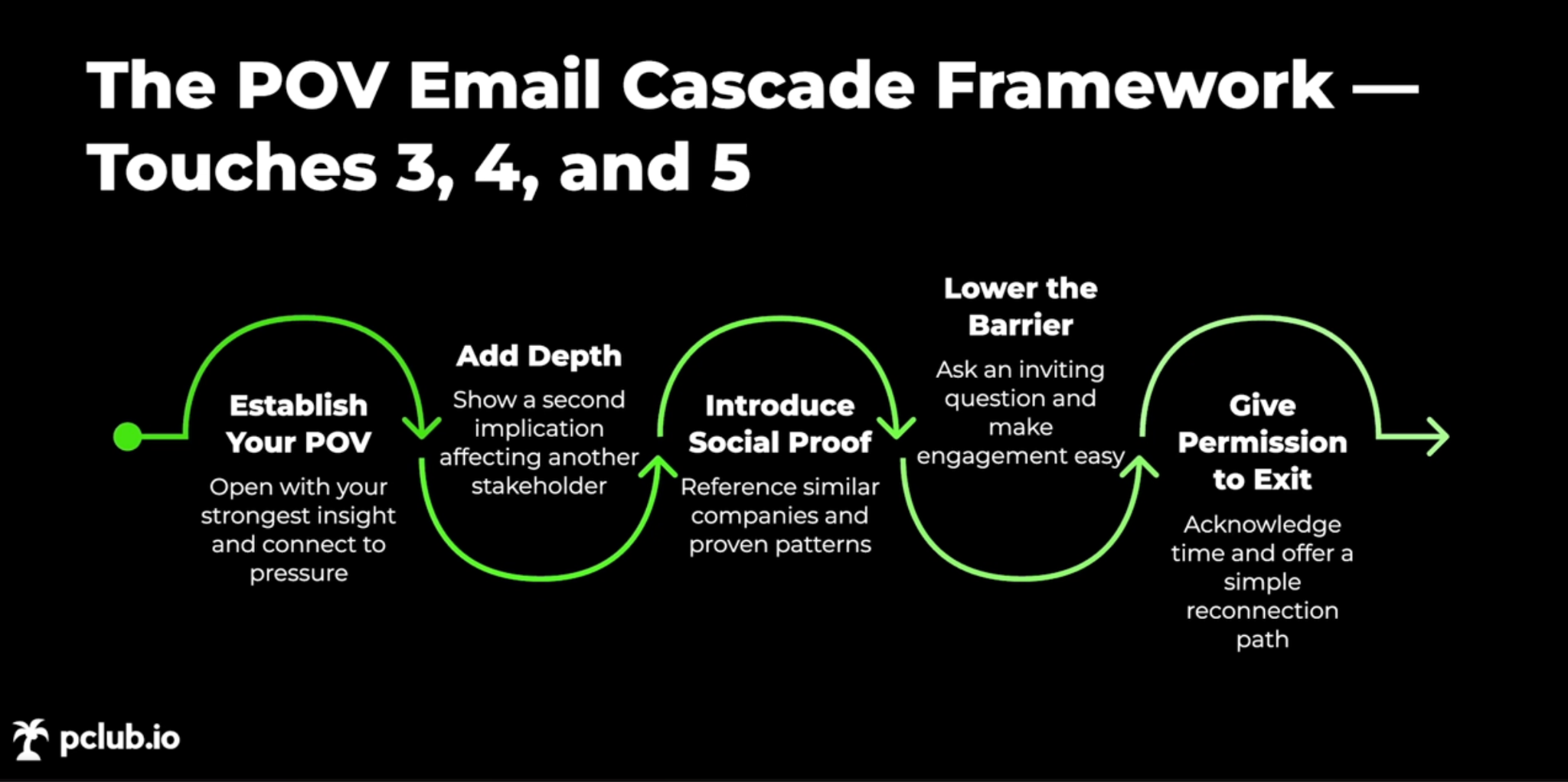
Here's the structure that consistently works: Turn 1 strong insight into 5 interconnected touches. Each of the 5 touches has a specific job.
1. Open with your strongest insight.
2. Show a second painful implication.
3. Introduce social proof and a quick story.
4. Invite engagement in a low pressure way.
5. Give permission to exit (lose the cheesy lines)
Visually, the framework looks like this.
Want a few examples?
Here are just a few he shares in the program:
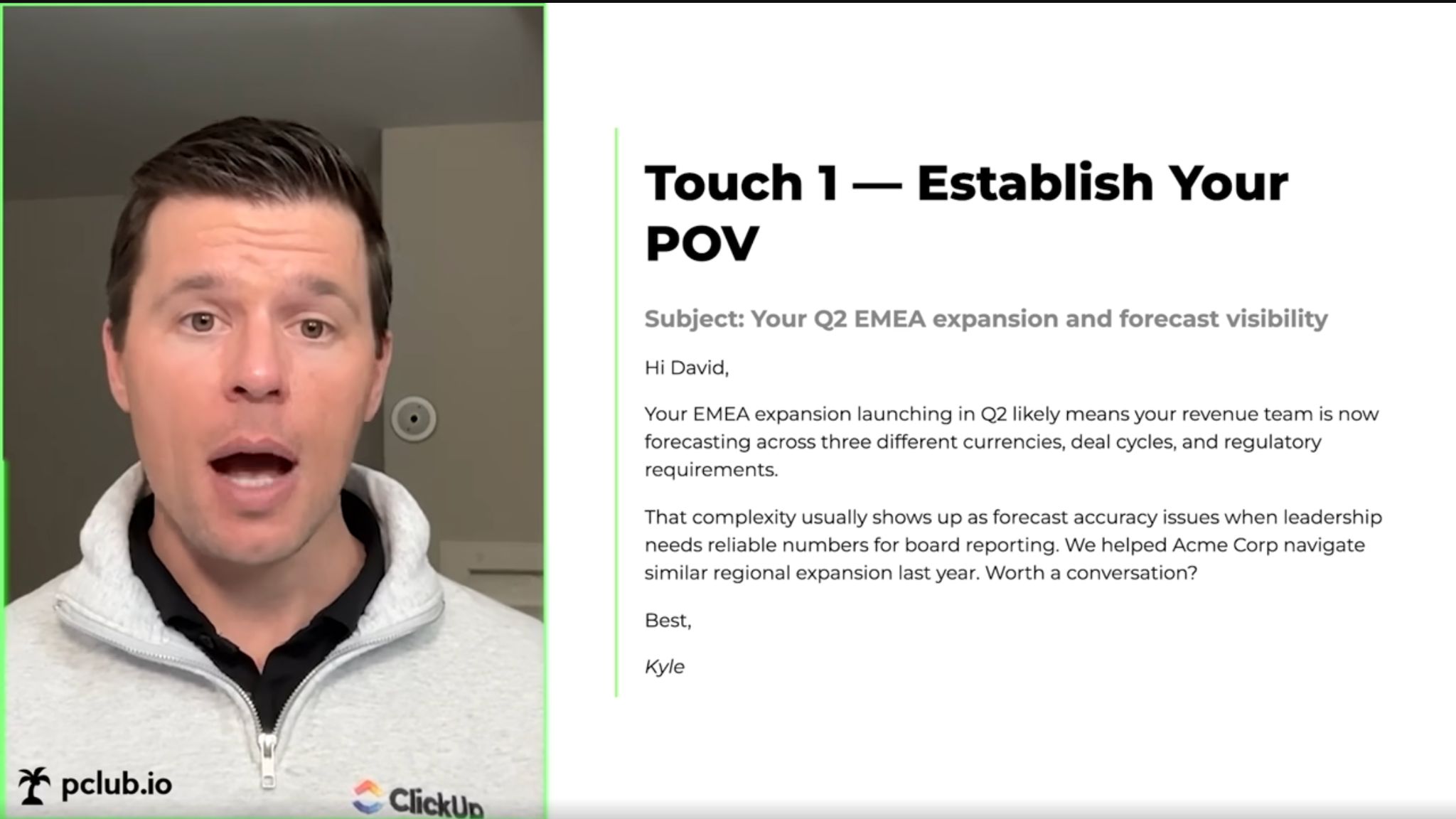
Notice again the POV does the heavy lifting.
It’s not just about the signal (EMEA expansion).
It’s the interpretation of the signal into an insight: What does that signal mean for your buyer? What kind of operational or strategic pressure does it create?
In this example, that pressure comes in the form of forecasting complexity: different currencies, deal cycles, and regulatory requirements.
Here’s the second touch that builds on the first touch by expanding on additional implications:
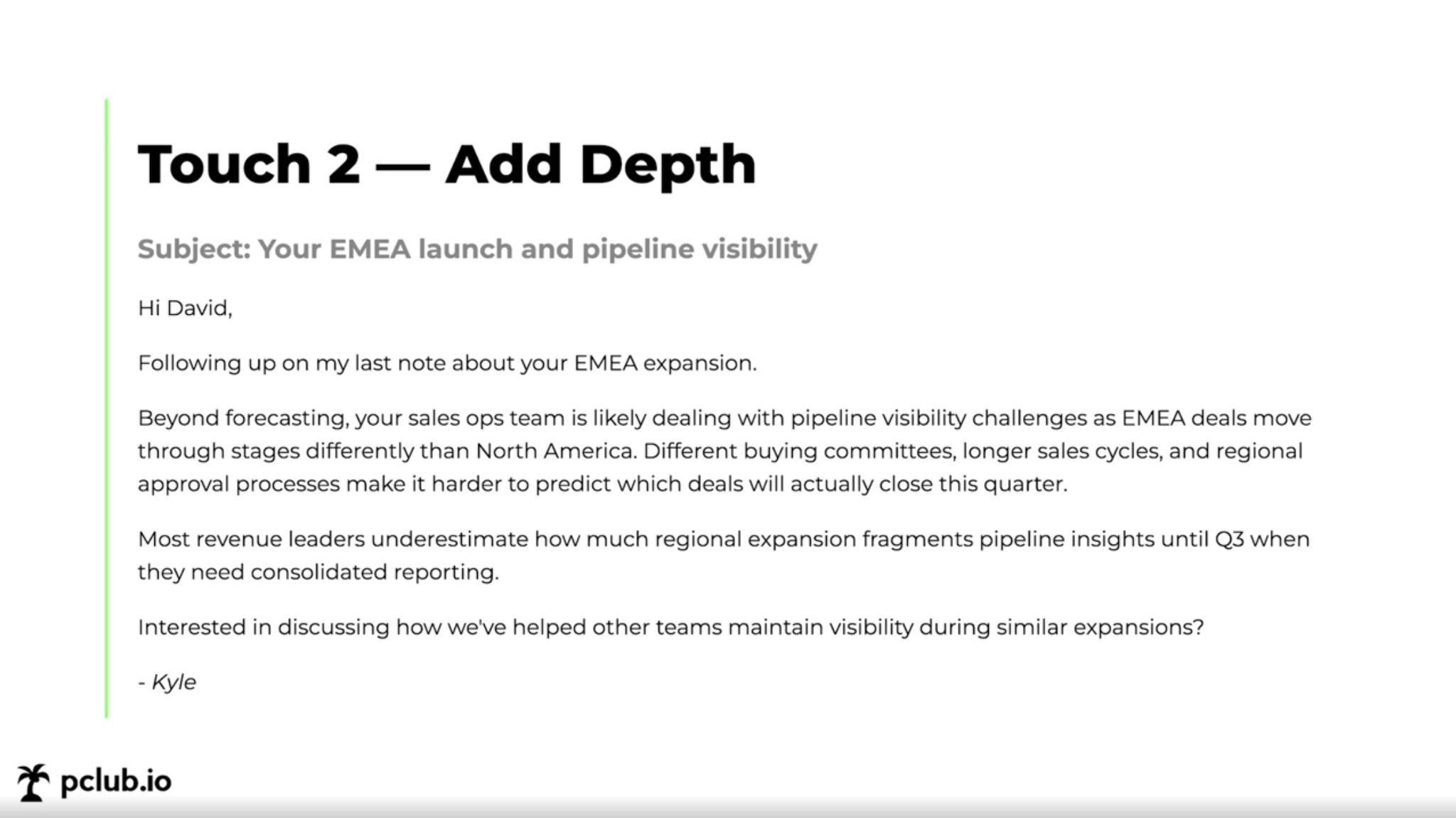
He’s not just repeating the same thing as he did in touch 1.
He’s adding depth.
He’s introducing another implication (or operational pressure) to add another piece of bait on the line, so to speak.
That leads to touch 3, the introduction of social proof:
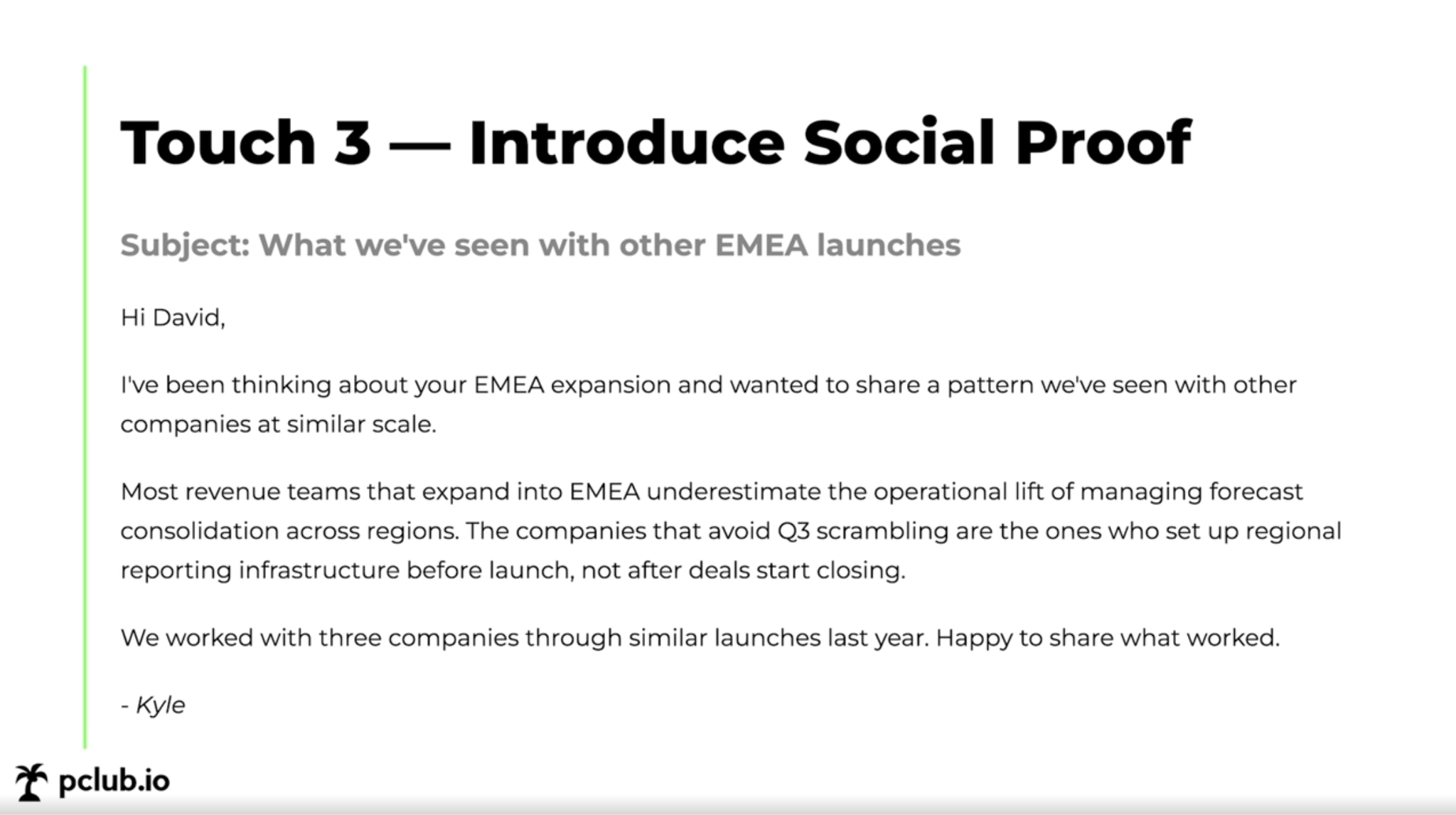
Different and new angle.
Not just repeating the same message five times.
Social proof, in this case, plays a strategic role throughout the sequence.
Every touch point has a unique “job.”
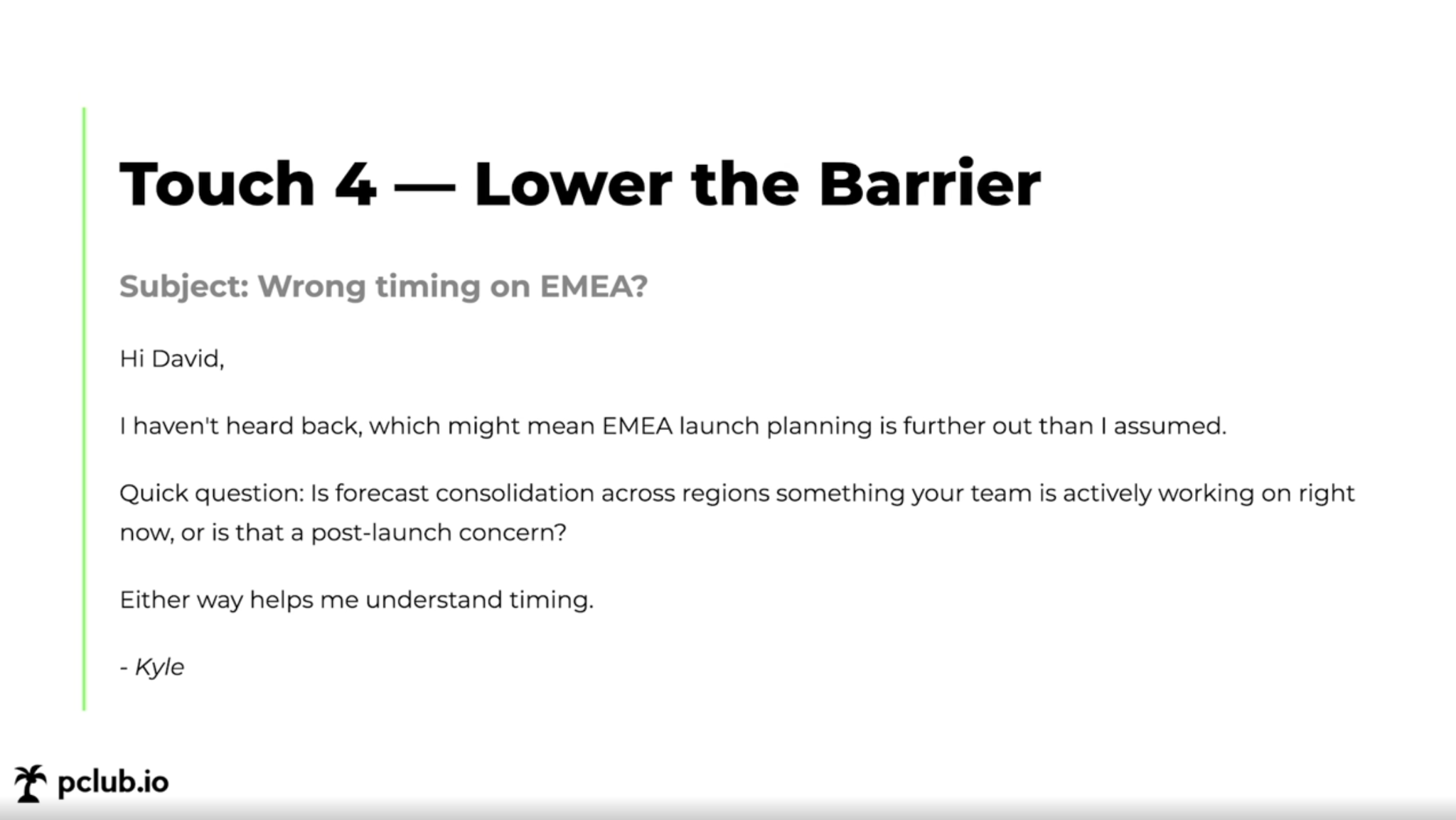
Touch 4 now has a new tone to it.
You can see the pressure doesn’t ramp up, it ramps down.
It invites engagement, in a non threatening, low pressure way.
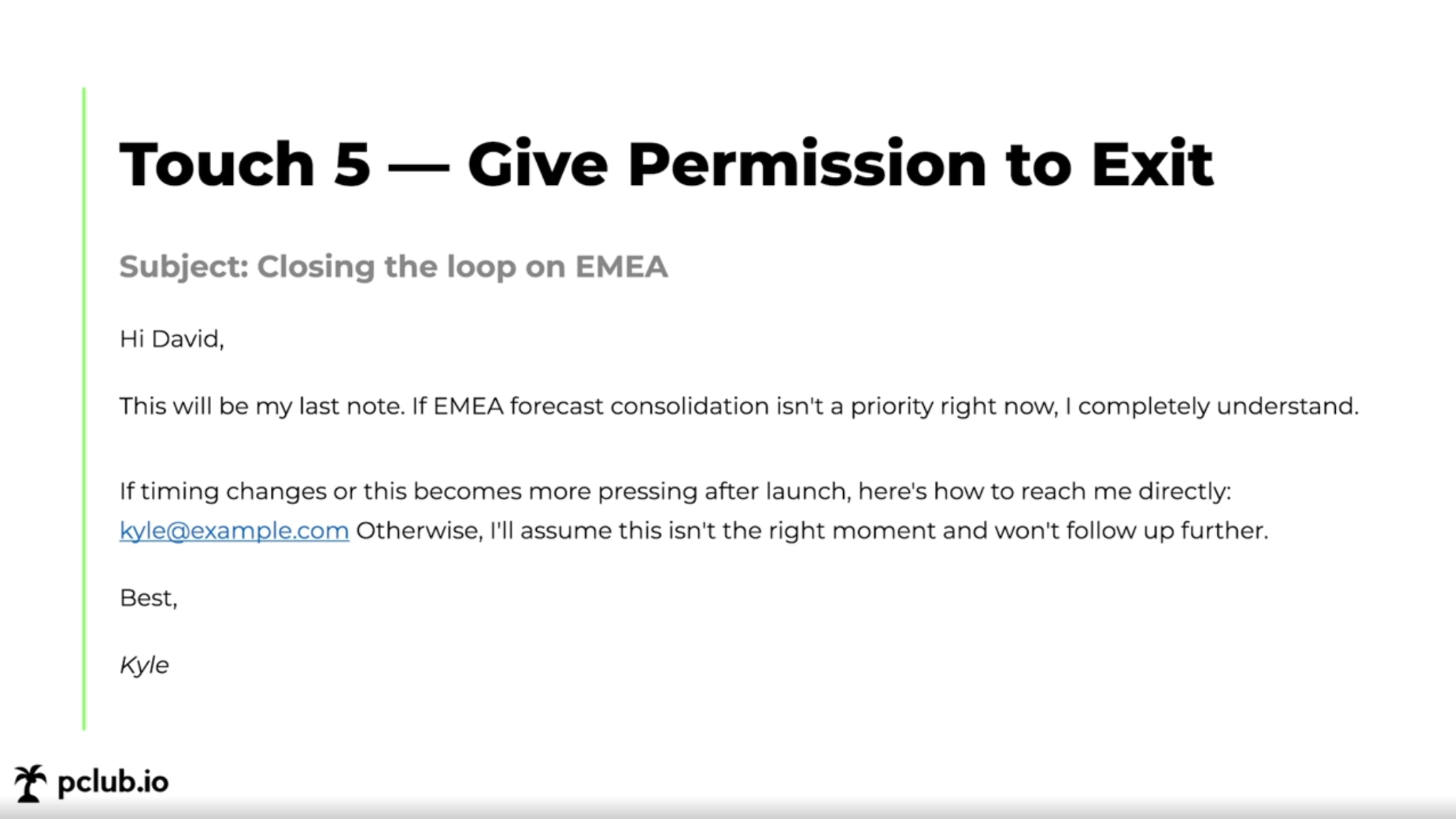
And finally Touch 5 cements the sequence with a graceful exit that keeps the door open for future conversations, in a respectful, professional manner:
POV-led outbound is the future of pipeline generation
Here’s what I love the most about everything Kyle teaches in this program:
Cold email tactics and hacks have a short shelf-life. Buyers stop responding as sellers everywhere start using the same gimmicks and tactics.
But POVs are timeless – buyers will always respond to people who demonstrate an understanding of their business.
POV-led outbound is a skillset of the future.
You (or your business) needs this skill to continue to keep and generate pipeline as the relentless march of AI continues. Because your POV is your revenue strategy.
Kyle’s program can give you this super power.
And it’s the only place on the planet where you can learn (and master) this revenue-producing skill.
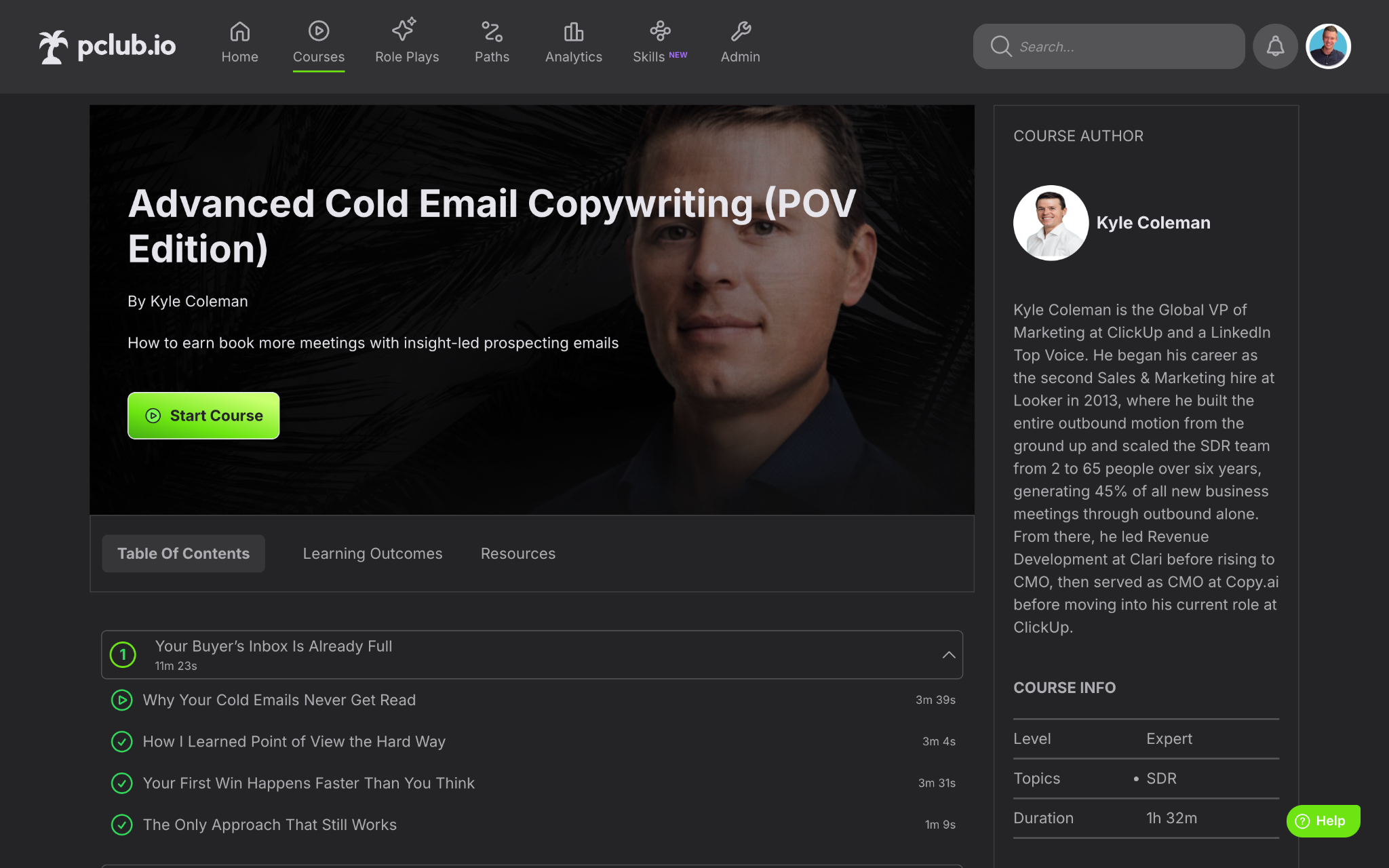
Take a deeper dive and learn more about Kyle’s program in pclub.io here:
And if you’re a revenue leader who wants to upgrade your team’s skillsets?
.svg)





.svg)
.webp)

